Franz Berwald worked as a physiotherapist, and besides operating a medical gymnastics clinic, he managed a glassworks and a brickyard. Despite many attempts to establish a musical career for himself, he did not meet with much comprehension from his contemporaries. During Berwald’s lifetime, the Sinfonie sérieuse was the only one of his four symphonies to be performed, and it was not a success.
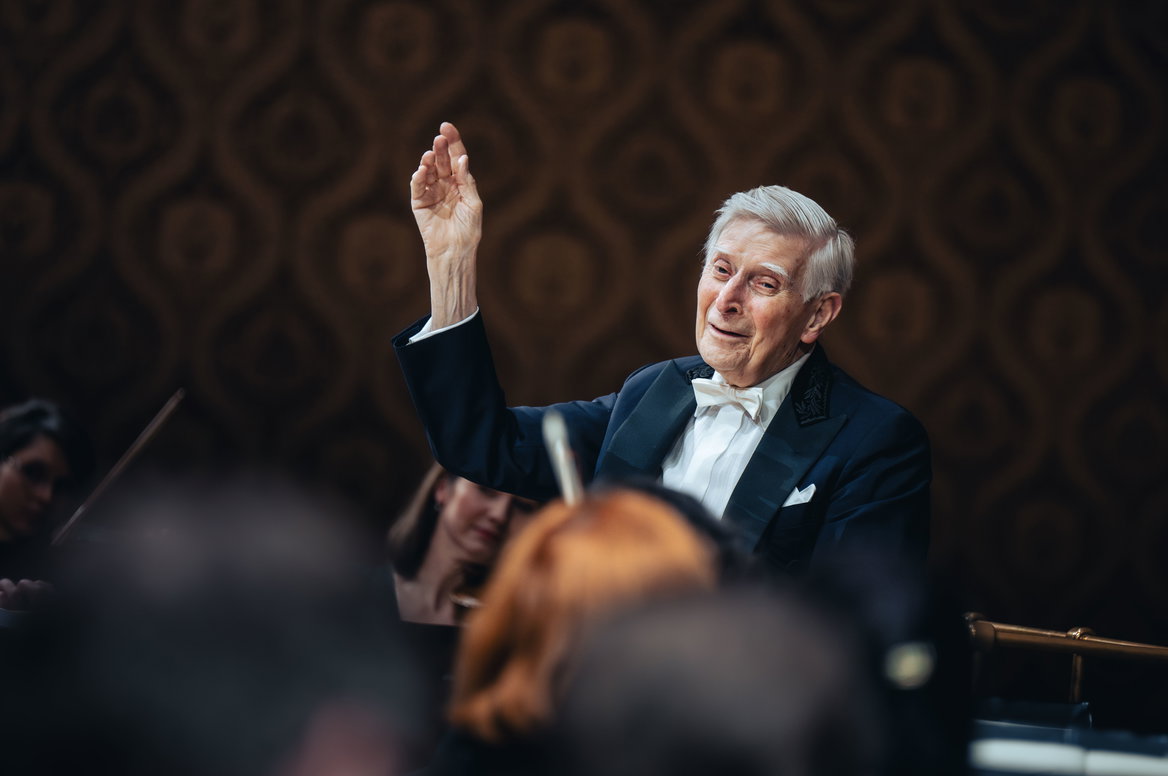
“There were plenty of listeners who told Berwald he belonged in a madhouse. Just a year before he died, he became the professor of composition at the Royal Academy of music in Stockholm. He left behind a brief textbook, something like a manual for novice composers. According to him, all young composers have to ask themselves some basic questions. Is what I have just composed technically perfect? Is it absolutely unique? If not, into the fire with it… Berwald was simply a radical, and such people have difficult making headway”, says his leading advocate, the Swedish-American conductor Herbert Blomstedt, adding that the music of the composer he admires is above all original. Blomstedt attributes the prominent role of brass instruments in Berwald’s music to the symbolic role of horns in Viking culture, and he ascribes the musical surprises to the composer’s brilliance.
For the occasion of the 230th anniversary of Berwald’s birth, his Third Symphony is accompanied by Dvořák’s Eighth Symphony, sometimes called the “English Symphony” because of its place of publication, although it was written in 1889 at the composer’s summer home in the village Vysoká near Příbram.
“The concert went wonderfully, perhaps even as never before. After the first movement, everyone was applauding, after the second even more, and after the third it was so loud that I had to turn around several times and thank the audience, but after the finale there was a real tempest of applause from the public in the hall and in the balconies, from the orchestra itself, and even the people seated around the organ behind the orchestra were applauding so much that it was unbearable, and I was called up to the stage several times—in brief, it was so lovely and sincere, just like at premieres at home in Prague”, wrote Dvořák about the first British performance of the Eighth on 24 April 1890. Well, so much for worrying about applauding between the movements of a symphony.