
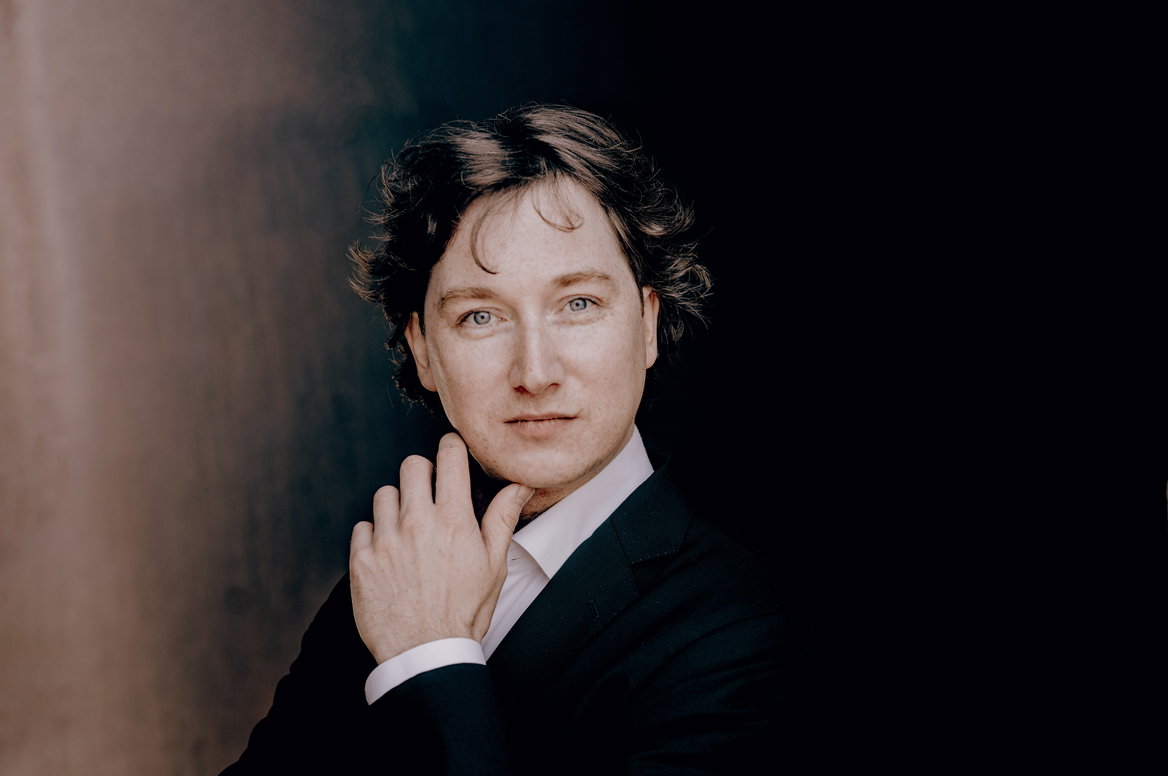
Czech Philharmonic ⬩ Maxim Emelyanychev
At the delayed Rudolfinum debut of the conductor Maxim Emelyanychev, we will hear music by the three great figures of Viennese Classicism: Haydn’s last symphony, a Beethoven opera overture, and a cello arrangement of a flute concerto that Mozart originally composed for oboe.
Programme
Felix Mendelssohn Bartholdy
A Midsummer Night's Dream, ouverture from music for Shakespeare's play, Op. 21
Wolfgang Amadeus Mozart (arr. for cello by George Szell)
Flute Concerto No. 2 in D major, K 314
Joseph Haydn
Symphony No. 104 in D major, Hob. I:104 “London”
Performers
Václav Petr cello
Maxim Emelyanychev conductor
Česká filharmonie
When Maxim Emelyanychev was singing in a boys’ choir in Nizhny Novgorod, his fellow pupils nicknamed him Mozart. He attached little importance to being compared to the musical genius, but the son of a singer and of a trumpet player had a clear vision of his future career from his childhood, when he spent time with his parents at rehearsals. “Music is the main thing” is his answer to questions about whether he feels himself to be more a pianist, a harpsichordist, a cornetist, or a conductor.
If he had to choose who to go with for a glass of wine, he would know right away: “I would really like to spend some time with Mozart. Above all, I think he would be good company, and we wouldn’t even have to do much talking. We’d have a drink, make some music together, and then maybe play billiards without any big formalities…”
At concerts, he likes to play compositions from various periods: “I enjoy combining different epochs; after all, musical development is a chain of mutual influences. When you understand what preceded Beethoven, you can interpret his music so it sounds revolutionary even today. I think the arts have to be contemporary, vital, and surprising. They should pack a punch that takes you out of your comfort zone.”
At the same time, from his position on stage, he aims to create a sense of calm and harmony at concerts — something listeners can ideally carry with them beyond the concert hall…
Rudolfinum — Dvořák Hall
Dress rehearsal
How to buy tickets
Buy onlineFor online shopping you will be redirected to the website of the Czech Philharmonic.
Personally at the Rudolfinum cash deskInformation not only about available seats will be provided by the customer service of the Czech Philharmonic.

Customer Service of Czech Philharmonic
Tel.: +420 227 059 227
E-mail: info@czechphilharmonic.cz
Customer service is available on weekdays from 9 a.m. to 6 p.m. Whenever you need to purchase a wheelchair-accessible ticket.
Customer Service of Czech Philharmonic
Tel.: +420 227 059 227
E-mail: info@czechphilharmonic.cz
Customer service is available on weekdays from 9 a.m. to 6 p.m. Whenever you need to purchase a wheelchair-accessible ticket.